
Is an AI Agent Worth It? The Honest Math on Chat Support
AI agents are changing how e-commerce businesses handle customer support, improve chat response rates, and reduce costs across Shopee, Lazada, and TikTok Shop. In this webinar with Content Shifu, Zaapi COO Vic explains how AI agents manage customer conversations, when to escalate chats to human agents, and how to calculate the real cost of AI customer support. Explore a complete cost-per-message breakdown for 70,000 monthly chats, discover when a paid AI agent becomes cost-effective, and learn when a free AI tool is still the smarter choice.

Short answer: In the cost model presented by Zaapi and Content Shifu, a paid AI agent starts becoming cost-effective at around 5,000 customer conversations per month. At 70,000 monthly conversations and a 60% AI resolution rate, the model reduces support cost from US$0.27 to about US$0.11 per conversation—a saving of US$11,480 per month.
We ran the full numbers with Content Shifu, one of Thailand's leading B2B content platforms. Zaapi COO Vic presented the session, including a live demo of an AI agent handling a real chat. Watch it below, or read the summary.
📌 Please note: This webinar was conducted in Thai.
1. Your shop now serves two masters
Selling online is like renting in a mall. You need trained staff to serve and sell, and you follow the mall's rules on hours and storefront standards.
Chat commerce is the same game on harder terms:
- The customer: Expects a fast, helpful reply on any channel, at any hour.
- The platform: Sets the rules for the marketplace where you sell—and this mall never closes.
The bit sellers underestimate: on a marketplace, the buyers in your shop are really the platform's buyers. Reply fast and you get a prime spot: better ranking, free traffic, campaign access. Reply slowly and the platform quietly moves you to a corner nobody walks past.
2. The reply rules, in black and white
These are published, measured daily, and tied to your traffic.
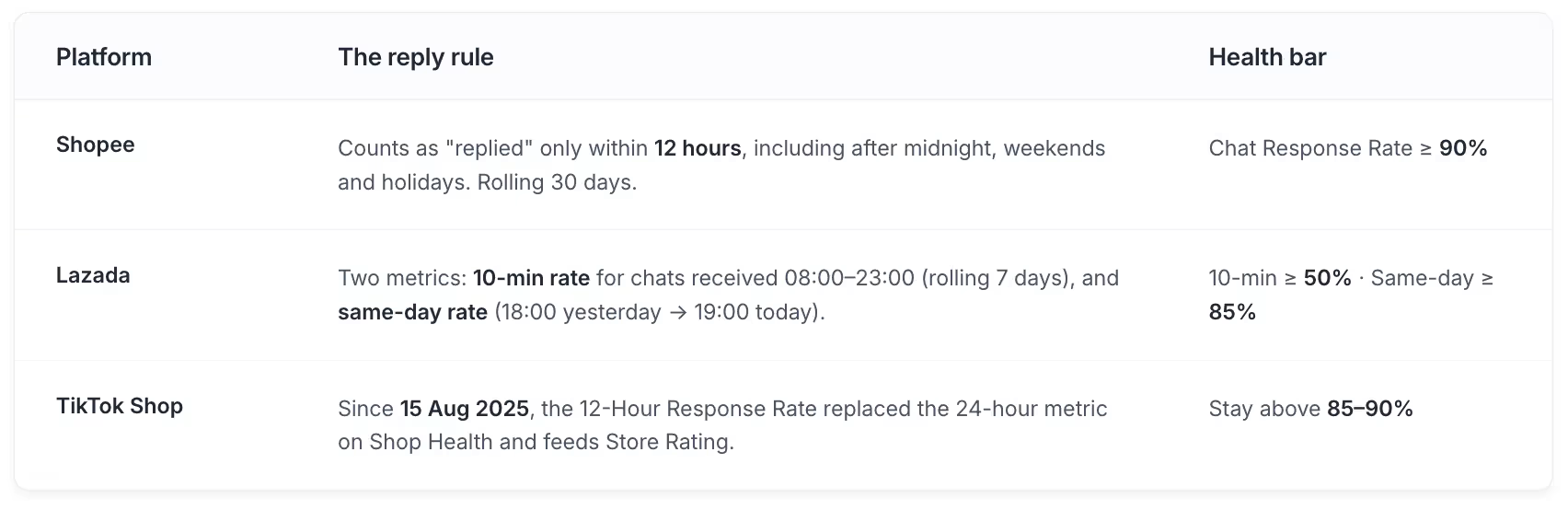
⚠️ Two things to check before you automate this. Platform-native auto-replies generally don't count. Shopee says so explicitly. And rules differ by country site. Confirm on your own seller centre how replies sent through an integrated tool are counted.
💡 Common mix-up: Lazada's 85% applies to the same-day rate, not the 10-minute one. The 10-minute peak-hour bar is only 50%. Two metrics, two thresholds.
3. What an AI agent actually does, and doesn't
Three things it's genuinely good at:
- Always on. Replies the second a buyer messages, so your response rate survives 3am, exactly when the platform rules bite.
- Answers. Product, stock, shipping and order status, instantly and consistently, plus expert questions that take a new hire months: clinical Q&A, on-the-fly pricing maths, multiple languages.
- Qualifies. Chats until real buying intent shows, so your team skips the browsers.
Two things it should hand to a human:
- Outside the knowledge base. Questions it was never given answers to. It should hand over, not improvise.
- Anything needing a real action. Refunds, cancellations, complaints.
It isn't a replacement for your team. It cuts the workload, trims headcount where the work is thinnest (night shift above all), and lifts service quality.
4. The math: 70,000 chats a month
A multi-brand FMCG company. 70,000 chats/month, AI resolves ~60%, so 42,000 go to AI and 28,000 to people. Both sides fully loaded.
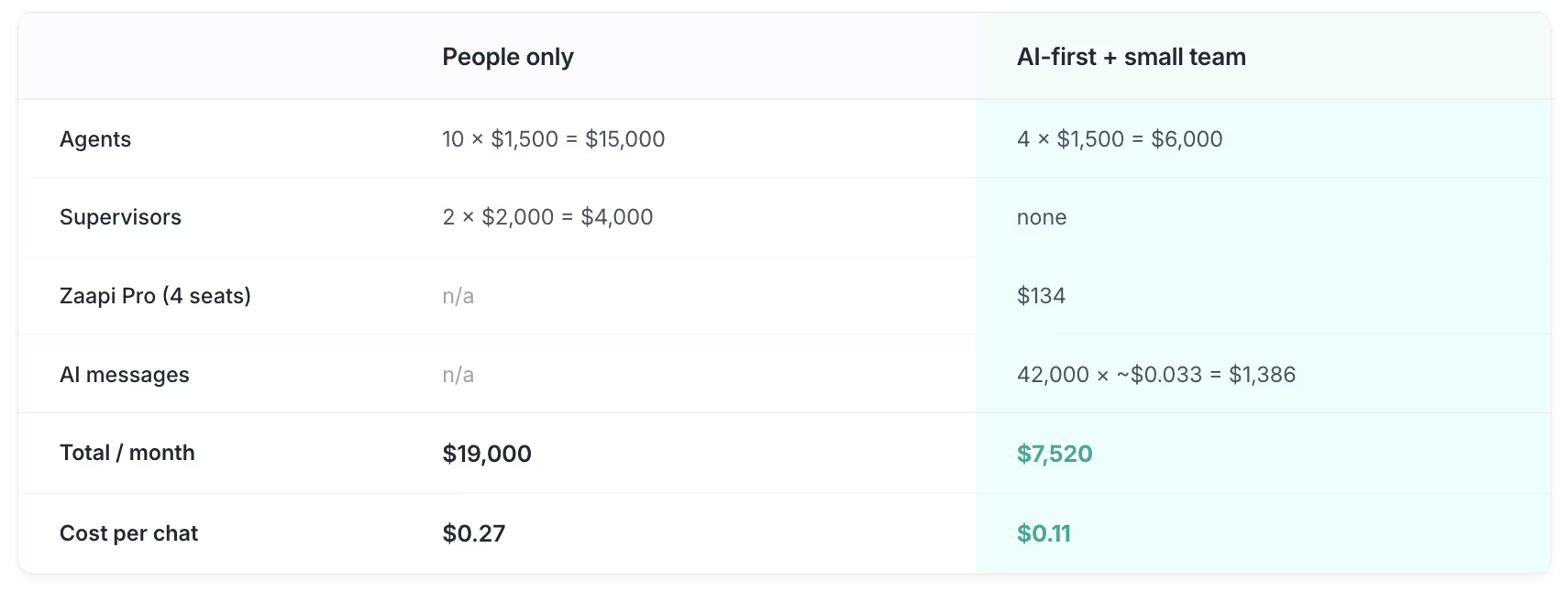
Saving: ~$11,500/month, about $138,000 a year.
Note what's driving it. Not the subscription; that's $134 of a $7,520 bill. It's six people's worth of repetitive work moving to a line item that costs three cents a message.
Assumptions: one agent handles ~7,000 chats/month · loaded agent cost 1.5× base salary · Zaapi Pro annual pricing · AI messages from $40/1,000. Swap in your own numbers.
5. So, is it for you?
Small and simple: stay cheap. One channel, under ~2,000 chats a month, a team of one or two. A free LLM plus an admin is genuinely fine here.
Growing: start testing. Two or three channels, a team of three to five, real peaks, and the same questions all day. This is where a unified AI tool is worth trialling.
Medium and up: AI wins clearly. Three or more channels or multiple brands, a team of five plus a supervisor layer, volume still climbing. At this size every extra message costs cents, not a new hire.
We'd rather say it plainly than sell you something you don't need: under ~2,000 chats a month on one channel, a paid tool costs you money. Come back when volume grows.
6. The one number you can't spreadsheet
No Excel model tells you how much AI will actually solve for your products. Resolution rate is product-specific. FMCG with simple SKUs hits ~90%; cars, custom furniture and property sit under 50%.
Try → Measure → Scale. Turn AI on for one channel. Watch your real resolution rate and where it hands off. Roll out only where the numbers hold.
Frequently asked questions
At what volume does a paid AI agent pay for itself?
Around 5,000 conversations a month. Below that the subscription is spread across too few messages. Above it, cost per chat falls toward US$0.11 versus roughly US$0.27 for a people-only team.
What's a realistic AI resolution rate?
FMCG with simple SKUs can reach ~90%. Considered, configurable purchases (cars, custom furniture, property) usually sit below 50%. Pilot one channel and measure your own.
Will it protect my Shopee or Lazada response rate?
That's what it's built for, by replying instantly around the clock. Caveat: platform-native auto-replies don't count toward these metrics, and rules differ by country. Confirm on your seller centre.
Does it replace my support team?
No. It removes the repetitive first line and the overnight cover. Refunds, complaints and anything outside the knowledge base still go to a human, and should.
📥 Get the full presentation
The webinar covers more than we can fit here: the three eras of reply technology, the three ways to build an AI agent, the cost curve across five business sizes, and the three mistakes people make when costing this.
[Download the full slide deck →]
Then run the numbers on your own store: Start your free Zaapi trial
*This article draws on the Zaapi × Content Shifu webinar. All pricing and marketplace policy information was checked on 25 August 2026; details may differ by market, seller programme, and subscription plan.
