
When AI Isn't Enough: How to Escalate to a Human Without Frustrating Customers
AI works best in customer support when it knows when to hand the conversation to a human. This guide breaks down a four-step AI escalation workflow, from deciding which conversations AI should handle and setting escalation triggers to creating seamless handoffs with full context and measuring the right team KPIs, so businesses can automate routine support without sacrificing the human touch.
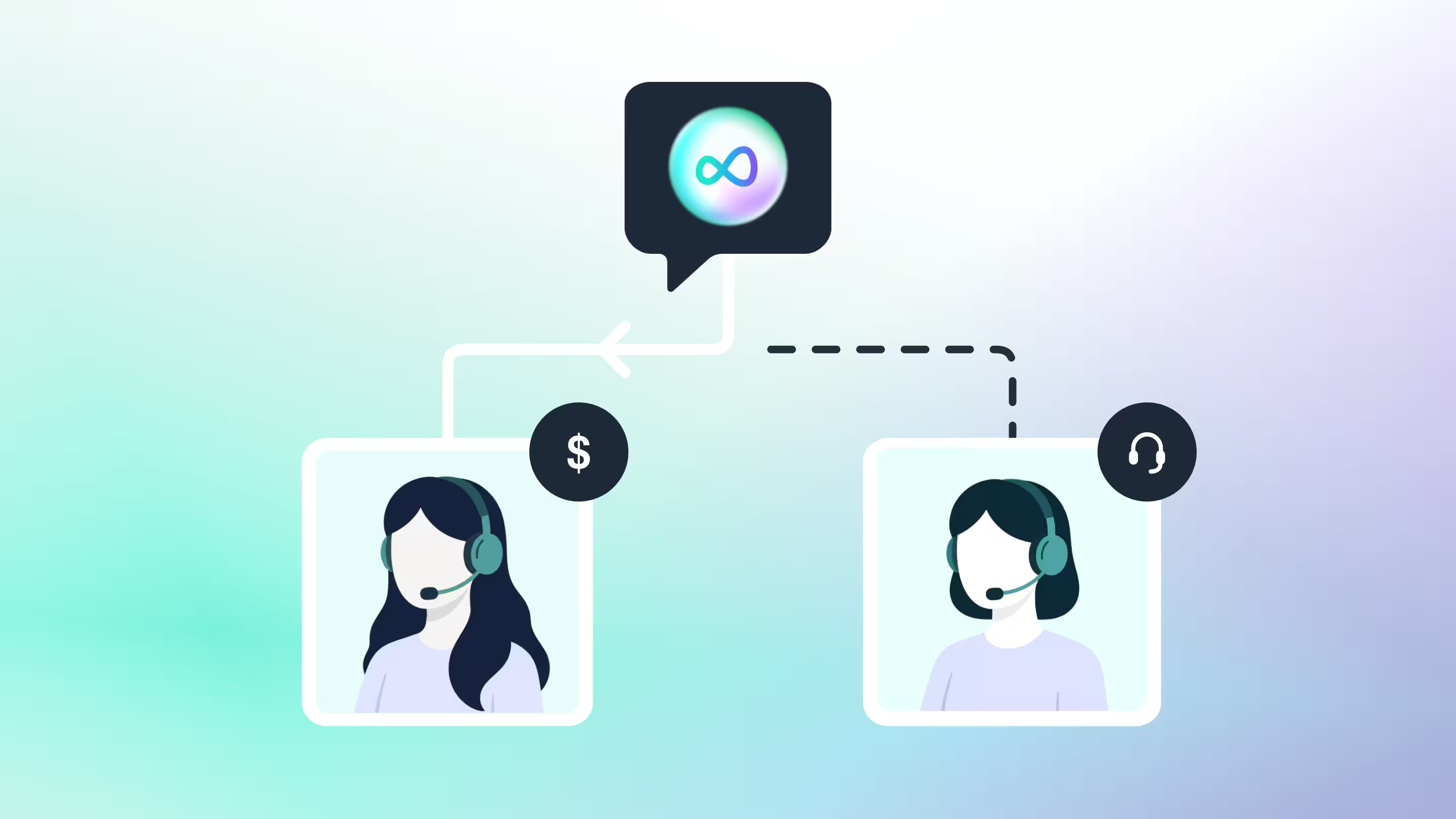
The most common objection we hear from business owners considering AI support isn't about cost or setup. It's this: "What happens when the AI gets it wrong? What if it can't answer? What if it frustrates the customer?"
Fair concern. We've all met the other kind of chatbot, the one that answers every message it doesn't understand with a cheerful "Sorry, I didn't catch that!" until you want to throw your phone across the room.
But the brands using AI most effectively aren't trying to replace humans. They use AI as the frontline that handles the straightforward 80%, while keeping humans available and informed for the moments that genuinely need a person. The piece that makes it work is the escalation workflow, the rules and triggers that govern exactly when and how a conversation moves from AI to human, without the customer noticing a seam. Here's the four-step framework the best teams use.
Step 1: Classify your conversations before you build anything
Before configuring a single rule, review a month of real chat history and sort every conversation type into two buckets.
AI territory (the 80%): clear, factual answers that need no negotiation or judgment, such as order tracking, stock availability, size guides, return policy, payment methods, store hours, promo codes, shipping estimates, warranty, and standard FAQs.
Human territory (the 20%): anything needing judgment, relationship, or authority, such as complex complaints, refund negotiations, VIP management, high-value upsells, technically complex questions, and any situation where the customer is clearly upset.
Once the boundary is clear, you can configure with confidence.
Step 2: Set up your escalation triggers
Three types are worth building:
- Keyword triggers: phrases that demand a human, such as "speak to a person," "I want a refund," "this is broken," "manager," "complaint," or "unacceptable." When any appears, the AI stops, the admin is notified, and the chat is flagged priority.
- Value triggers: a threshold on order value or customer tier. If the cart is above, say, $150 (฿5,000), or the customer is a Gold-tier repeat buyer, the system bypasses AI and routes straight to a senior sales admin, so your highest-value opportunities always get a person.
- Sentiment triggers: more advanced AI can read emotional tone in real time. If the customer's language turns impatient or distressed, it escalates before the situation deteriorates. Getting ahead of a complaint is far easier than recovering from one.
Step 3: Design the hand-off so the customer never repeats themselves
This is the most important rule of any escalation system: the customer should never have to explain their situation twice. When AI escalates, the admin should receive, alongside the notification, a full conversation summary: everything the customer said, what they asked for, what the AI told them, and what's still unresolved.
The human can then open with "Hi, I can see you've been asking about the Model X in size L. Let me check our stock for you right now."
The customer experiences continuity. The conversation moves forward, not backward. This seamless, informed hand-off is what separates a well-designed system from a frustrating one.
Step 4: Redefine what you measure for your human team
Once steps 1–3 are in place, your admins are no longer answering routine questions. They're handling escalations that need judgment, empathy, or persuasion. Their KPIs should change accordingly.
Out: "average response time" as the primary metric.
In: "sales conversion rate on escalated conversations" and "customer satisfaction on resolved complaints."
This matters for morale as much as measurement: when your best people spend their time where their skills genuinely count, they perform better and stay longer.
The strongest support teams in Southeast Asia right now aren't the ones with the most admins. They're the ones with the clearest collaboration between AI efficiency and human expertise, exactly how brands handling 600,000+ chats a month keep service standards high without expanding the team.
Want to dive deeper? This article is adapted from Zaapi's AI Agents: Game-Changer or Just Another Trend?
📚 Download the eBook →
Let AI handle routine questions and your team step in when it matters most. Start your free Zaapi trial
